Losing a Friend, Gone but Still Here
At 28 (almost 29) years old, I have had my fair share of experience with grief. My first significant loss occurred when I was eight years old and my mom passed away after a six-year battle with stage 4 breast cancer. Grieving her loss has been a lifelong journey.
Since then, I have experienced other profound losses: my Opa and Oma, my oldest cousin who died from a drug overdose, another cousin close to me in age who lived with schizophrenia and died by suicide, and my Papa Fred. I don’t share these losses to seek sympathy, pity, or condolences. I share them so you can understand that I have been walking alongside grief for most of my life.
Over the last five years – through therapy, my social work education, my professional work, conversations with Indigenous Elders, ritual and deep self-reflection – I have come to a place I would describe as more comfortable and more capable in coping with my grief. Yet, none of these experiences prepared me for my most recent experience: the death of a close friend (and co-worker).
This loss happened less than a month ago, and not a day has gone by that I haven’t thought of Kelsey. This grief feels different.
I had never lost a friend before – someone my own age, someone woven into the fabric of my everyday life. Her death was sudden and very unexpected. I was texting with her early on the evening that she passed. We had dinner plans that weekend. Kelsey was perfectly healthy and 34 weeks pregnant with her second child. We were walking through pregnancy together.
The loss of a friend feels unique. A friend is not someone you expect to lose, especially this young. It isn’t the kind of grief we often hear spoken about openly. And when you are ‘just a friend,’ there is often less support. Your grief can feel invisible.
I’m not close with her family. Many of my own friends don’t know her. So, my circle of people to grieve with, share stories with and say her name with, is small. I have found that this can make grieving feel isolating and more difficult.
Kelsey was someone I spoke to every day. We shared our highs, our lows, and everything in between – including lots of laughter. I have been moving through waves of grief since her loss; yet a part of me remains in disbelief. It doesn’t feel real; sometimes it feels like my phone will light up with a message from her.
In moments like that I lean into what I do know about grief.
One of the most important lessons I have learned about grief is that relationships do not end when someone dies; they change. She may be gone physically, but her presence is very much still here. This concept is known as Continuing Bonds, introduced in 1996 by Klass, Silverman, and Nickman in their book Continuing Bonds: New Understandings of Grief. The theory suggests that maintaining an ongoing relationship with the person who has died is not unhealthy, it is human.
Continuing Bonds can take many forms and look different for everyone. For me, it means keeping photos visible, sharing stories and memories, listening to the wind and water, noticing signs in nature, allowing humour and laughter, creating my own rituals, speaking their names, and letting myself feel connected.
Even in the first month, I have experienced moments that remind me that she is still near.
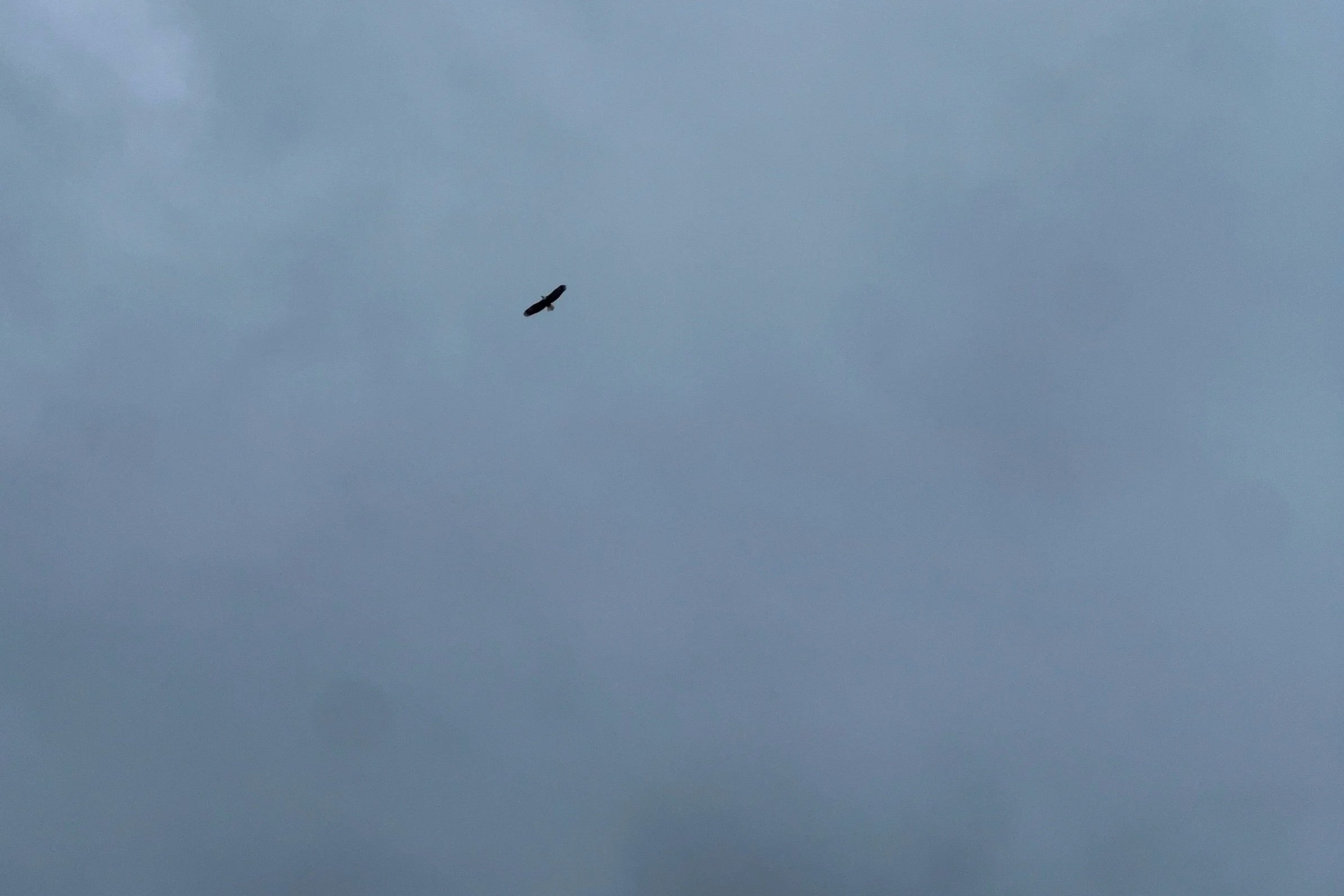
Recently, my work hosted a Celebration of Life in her honour. We spent the day out on the land: ice fishing, snow shoeing, and sharing stories. As we were getting ready to leave, an eagle began soaring overhead. In that moment we knew that she was there with us.
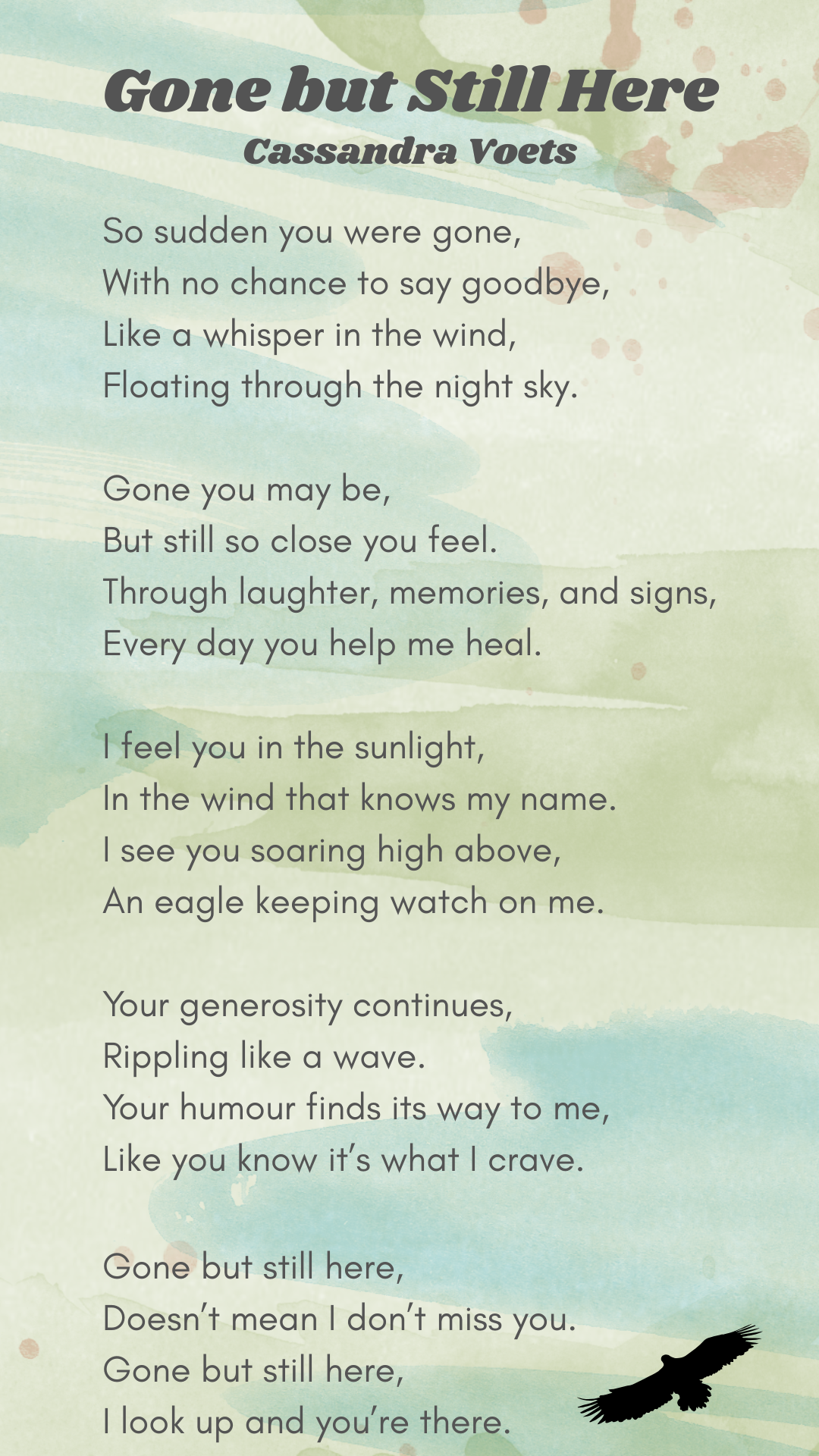
That experience inspired me to write a poem (see below) to reflect our continuing bond and evolving relationship.
Grief does not mean forgetting. Love does not disappear. Relationships do not simply end.
They transform.
If you are grieving a friend, especially if your grief feels unseen, I hope you know it matters. I hope you continue to speak their name. I hope you find your own ways to stay connected and continue the relationship.
They may be gone physically but they are not gone from the story of your life.